Special article by General Tan Sri Mohd Nizam bin Hj Jaffar, Chief of Defence Force, Malaysia
Background of the Conflict
Tensions along the Thailand-Cambodia border carry deep historical and emotional weight. What began as localised incidents quickly escalated into the most serious clashes seen in more than a decade. As civilians fled their homes and soldiers on both sides confronted one another, Malaysia stepped forward in the spirit of regional responsibility.
As a founding member of ASEAN, Malaysia has always believed that the peace and stability of Southeast Asia must be secured by the region itself through dialogue, mutual respect, and trust. Both Thailand and Cambodia expressed their readiness to de-escalate, and under the leadership of the Prime Minister, Malaysia facilitated the first discussions in Putrajaya. These talks, held in full alignment with ASEAN centrality and with the support of fellow member states, led to an agreement on an immediate ceasefire that took effect on 28 July 2025.
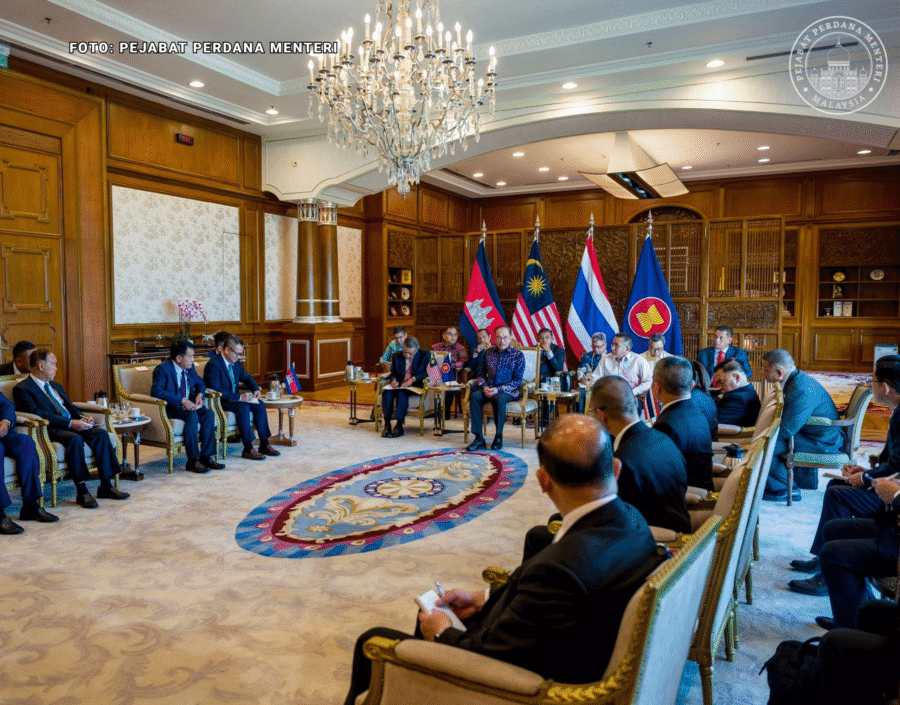
The discussions in Putrajaya, held at the height of the Thailand–Cambodia conflict, reflected Malaysia’s strong initiative and serious commitment to supporting regional peace and stability. Photo: Prime Minister’s Office.
That same night, my team flew to Bangkok and later to Phnom Penh to translate the ceasefire agreement into practical measures on the ground. We met with General Songwit Noonpakdee, former Chief of Defence Forces of Thailand, and General Vong Pisen, Commander-in-Chief of the Royal Cambodian Armed Forces, along with other senior military leaders, to ensure effective implementation of the commitments made.
Both nations agreed in principle to establish an ASEAN Observer Team (AOT) as the official mechanism for monitoring and verifying compliance with the ceasefire. While the AOT structure was being finalised, an Augmented Interim Observer Team (IOT), led by Malaysia’s Defence Attachés in Bangkok and Phnom Penh, was assigned to carry out neutral and interim monitoring duties. The IOT and AOT represent ASEAN’s collective commitment to transparency, confidence-building, and impartial oversight. Operating on both sides of the border under clearly defined mandates, these teams were conceived to uphold neutrality, verify implementation, and prevent any resurgence of hostilities.
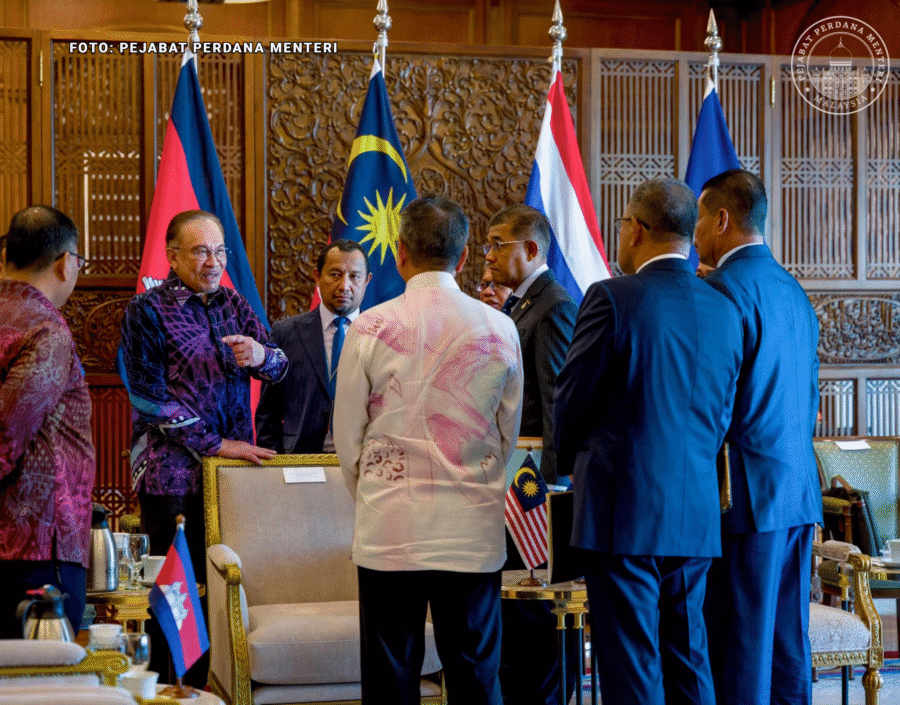
The discussions in Putrajaya, held at the height of the Thailand–Cambodia conflict, reflected Malaysia’s strong initiative and serious commitment to supporting regional peace and stability.
Photo: Prime Minister’s Office.
On 23 October 2025, Thailand and Cambodia signed the Terms of Reference (TOR) for the AOT and this achievement was further consolidated with the signing of the Kuala Lumpur Accord on 26 October 2025. The accord established four key action plans: the withdrawal of heavy weapons, joint humanitarian de-mining and clearance of unexploded ordnance, humanitarian cooperation, including arrangements for the release of detainees, and the deployment of the AOT to verify and report on implementation. These were not theoretical statements but binding commitments, witnessed by ASEAN and supported by the international community.
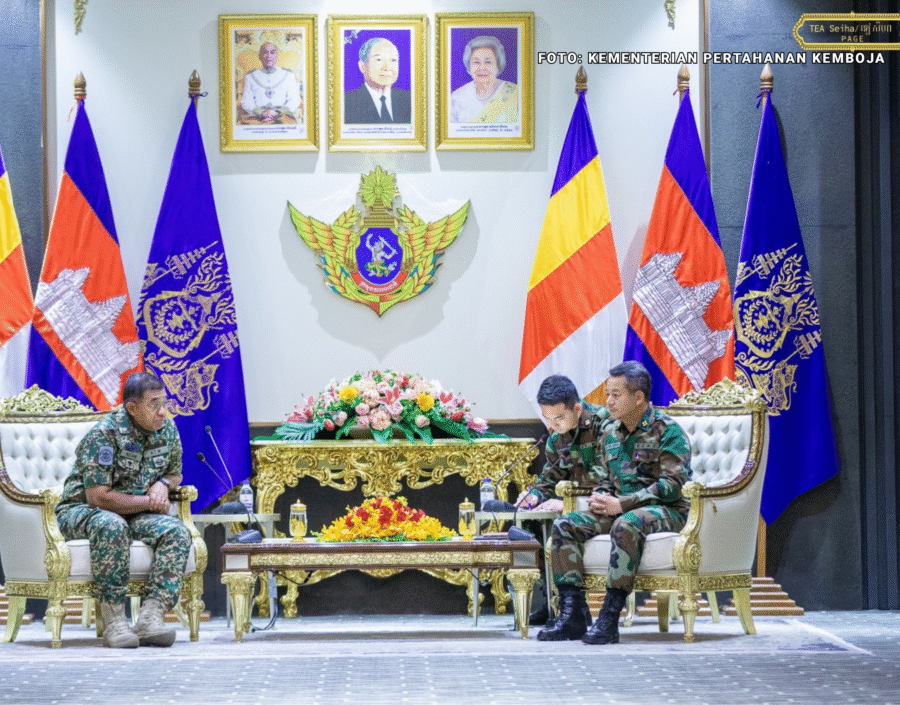
Chief of Defence Force, General Tan Sri Mohd Nizam Jaffar, departed for Thailand and Cambodia immediately after the ceasefire discussions concluded in Putrajaya at the end of July. Photo: Ministry of National Defence of Cambodia.
Addressing the Allegation
It is within this context that I must address the recent remarks made by retired Major General Rangsi Kitiyansap of Thailand, who accused Malaysia and our Prime Minister of acting as a hidden hand, or, as he described it, an “enemy within.” Such accusations are not only unfounded and unfair but profoundly disappointing, particularly when voiced by a former senior military officer. These claims reflect a poor understanding of ASEAN centrality and disregard the collaborative architecture that underpins this peace framework. They also undermine the very principles of professionalism and mutual respect that have long guided military institutions in our region.
Moreover, the allegation distorts both the content and the intent of the Kuala Lumpur Accord. The official documents underpinning this process are transparent and collectively endorsed by all participating governments. They outline clear commitments focused solely on peace, security, humanitarian cooperation, and regional stability. At this juncture, any attempt to discredit Malaysia’s role, the leadership of our Prime Minister, or the integrity of the AOT is malicious in intent.
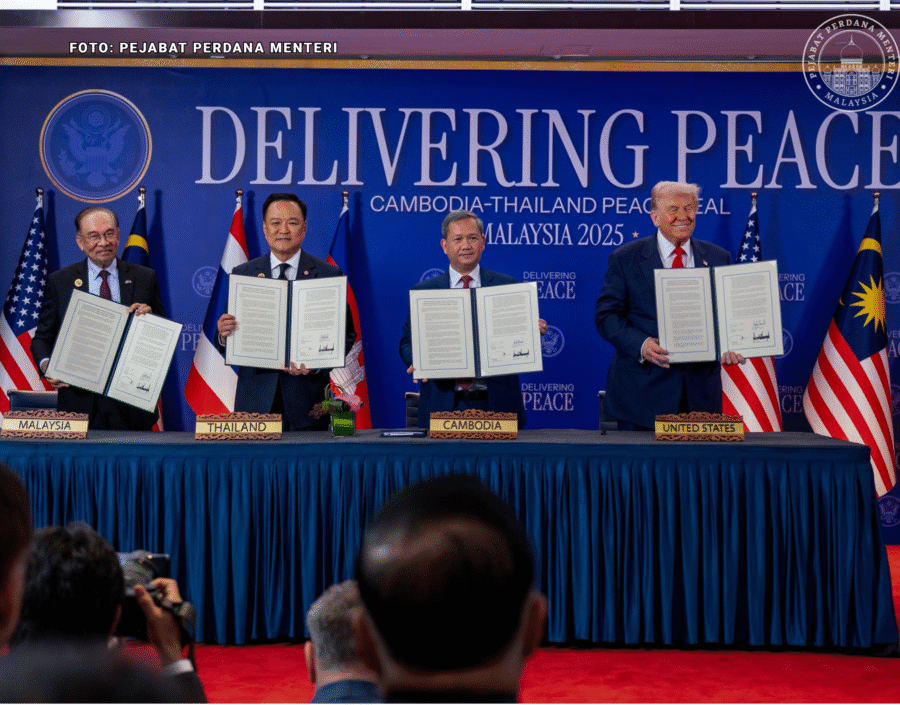
The signing of the Kuala Lumpur Accord marked a proud achievement for Malaysia and the Malaysian Armed Forces in their role of supporting regional peace. Photo: Prime Minister’s Office.
It undermines the core objective of the process, which is peace.
Malaysia has never sought recognition or credit. Our only interest has been to restore stability, protect lives, and uphold the principles of regional solidarity. Soldiers on both sides of the border deserve the chance to lay down their arms, while the families who have lived through months of fear deserve the safety to rebuild their lives. That has always been, and remains, our objective.
The Malaysian Armed Forces have long upheld the principle that peace is best achieved through mutual understanding and cooperation. From Mindanao to Timor-Leste to Lebanon, our peacekeepers have served with professionalism, neutrality, and respect for sovereignty. The facilitation of peace between Thailand and Cambodia is part of this same tradition of service.
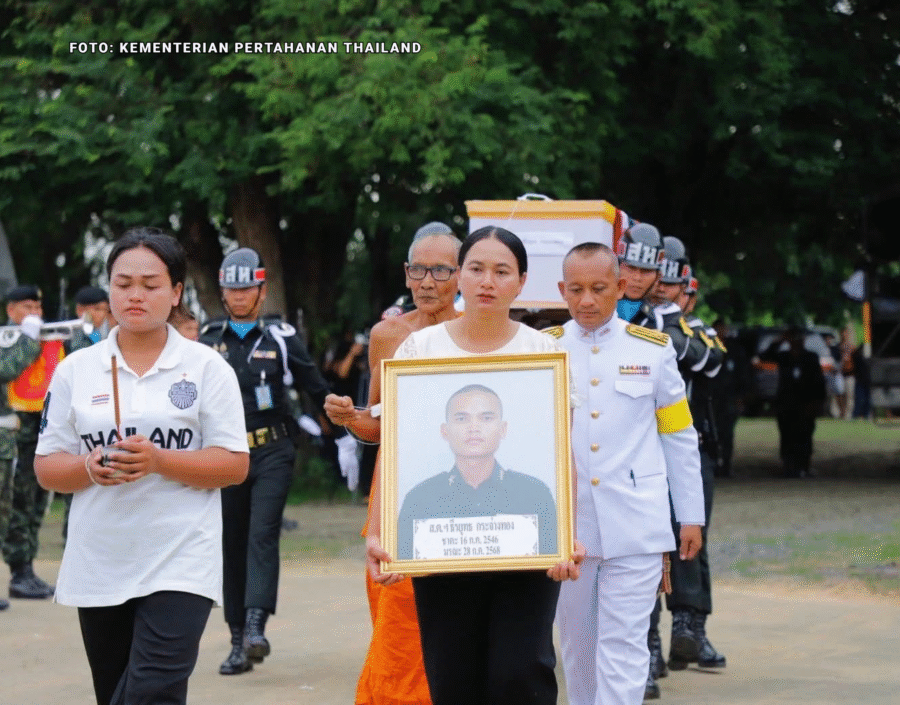
“Peace is expensive, life is precious, and time is essential. These are not mere slogans but hard truths that every soldier understands.” – General Tan Sri Mohd Nizam Jaffar. Photo: Ministry of Defence Thailand
A Reflection on Leadership and Integrity
Peace is never without cost. It requires patience, moral courage and the ability to look beyond personal or political pride. From the very beginning, three messages have guided every step we have taken: peace is expensive, life is precious, and time is essential. These are not mere slogans but hard truths that every soldier understands.
It is therefore deplorable when individuals who once wore the uniform choose to politicise a process aimed at preventing further loss of life. To call another leader a traitor or spy without evidence demeans not the accused, but the accuser. It disregards the tireless efforts of those who have worked quietly and selflessly to build peace and erodes the trust that is fundamental to regional security.
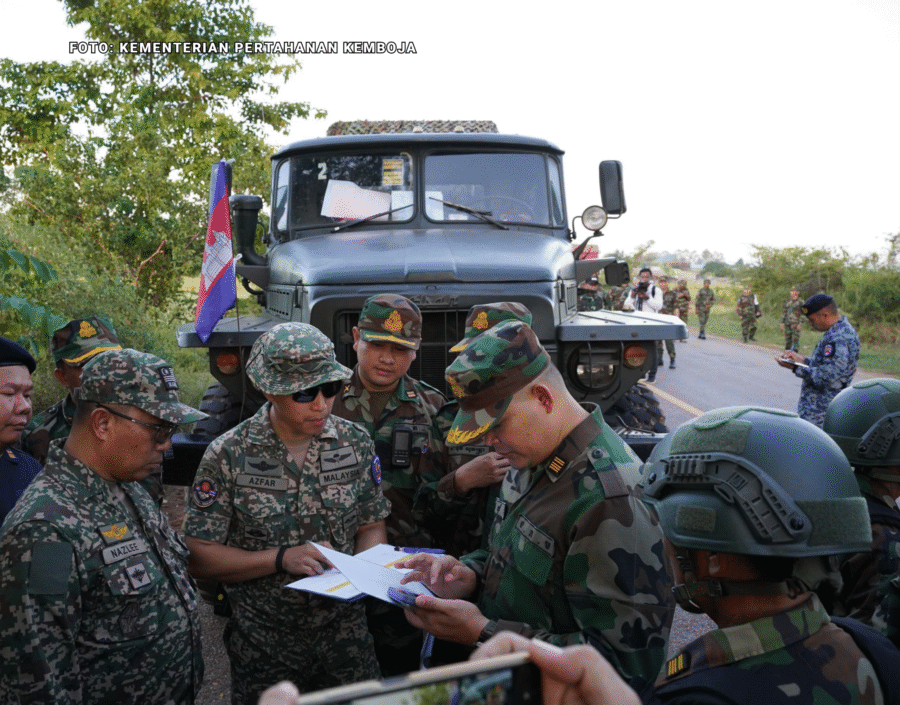
At present, the Thailand–Cambodia border area has returned to calm. This situation reflects the success of the Kuala Lumpur Accord signed during the recent ASEAN summit. Photo: Ministry of National Defence of Cambodia.
I would urge all officers, serving and retired, to uphold the principles of truth, fairness, and professionalism. The duty of a soldier does not end with retirement; it continues through wisdom, restraint, and example. Our responsibility extends beyond our borders to preserving the stability of the region we serve.
As Chief of Defence Force, I remain confident that the AOT, together with the governments of Thailand and Cambodia, will fulfil the commitments signed in Kuala Lumpur. Progress is already visible on the ground, with weapons withdrawn, de-mining operations underway, and border communities beginning to return to normalcy. These are the real markers of success, not the noise of unfounded accusation. Malaysia remains steadfast in its commitment to ASEAN-led solutions, the respect of national sovereignty, and the transparent implementation of all peace agreements. The Malaysian Armed Forces will continue to serve as a reliable and trusted partner in advancing these shared values.
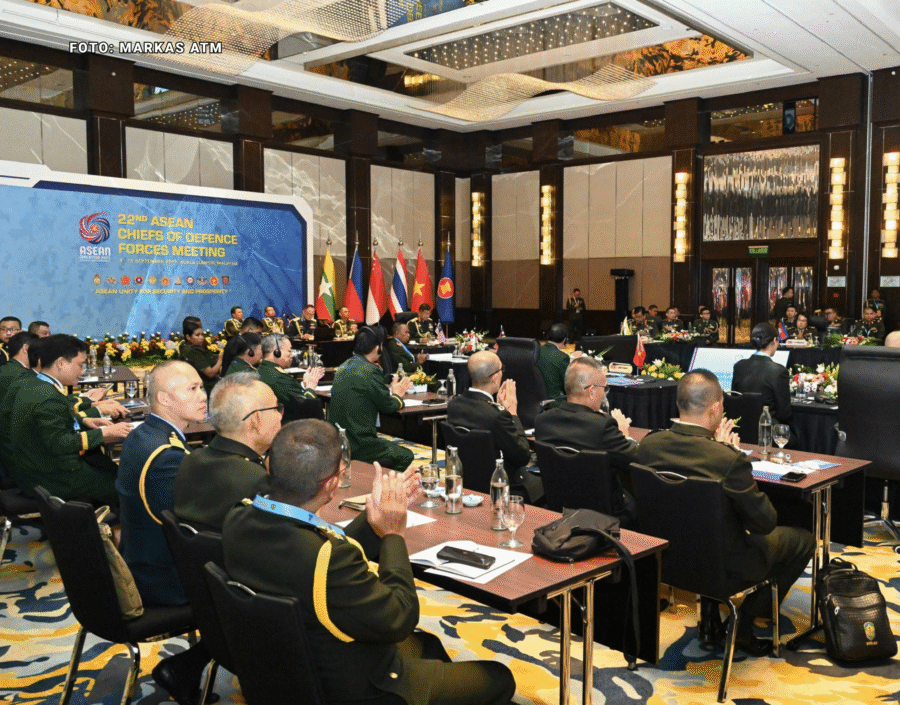
ASEAN Centrality underscores multilevel cooperation, including among military forces, to ensure regional peace, stability, and security.
Photo: Malaysian Armed Forces Headquarters.
Pax optima rerum.
Peace remains the best of things, and it is the end state we have pursued from the very beginning.
******************************************************************************************************************************************************
General Tan Sri Hj Mohd Nizam bin Hj Jaffar is the Chief of Defence Force of Malaysia. This article reflects his official clarification on Malaysia’s role in the Thailand–Cambodia peace process.
******************************************************************************************************************************************************