
Asia-Pacific is not short of passengers. International traffic is recovering strongly, airlines are adding capacity, and major hubs across the region are trying to capture more movement after the post-pandemic recovery.
IATA reported that Asia-Pacific airlines recorded a 10.9 per cent increase in full-year 2025 international traffic compared with 2024. Capacity rose 10.2 per cent, while load factor increased to 84.4 per cent. The region ended 2025 with the fastest growth rate and the highest load factor of any region in the international market.
The demand side is no longer the hardest part of the equation. Airports can be expanded, aircraft can be added and new routes can be opened. Airspace cannot be expanded or scheduled with the same simplicity as aircraft fleets or airport terminals. Every flight must move through operational boundaries, control systems, technology levels and regulatory practices that are not always aligned between one country and another.
“Asia-Pacific’s growth is not constrained by demand. It is constrained by structural fragmentation,” said Hervé Dammann, Executive Vice-President, Land and Air Systems, Thales.
Dammann’s warning shifts the focus from market demand to the region’s ability to coordinate traffic across national and operational boundaries. The question is no longer whether people want to fly. The harder question is whether the region can manage thousands of aircraft movements across airspace that is becoming denser, more digital and more exposed to disruption.
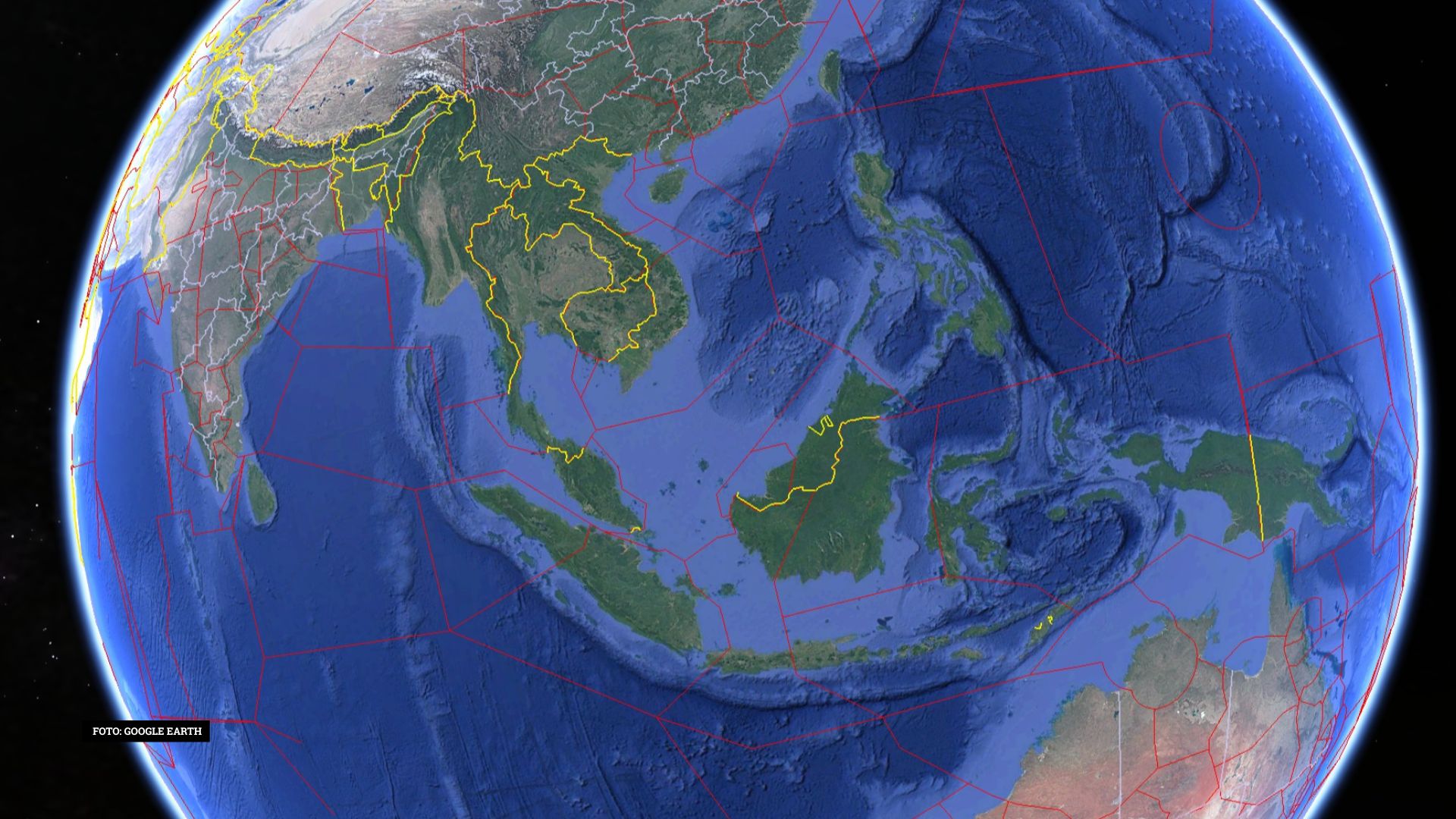 The Asia-Pacific airspace is divided into 49 separate flight information regions (FIRs). Photo: Air Times/M Daim/Google Earth (Layer with FIR)
Why 49 FIRs matter
Asia-Pacific operates under 49 separate flight information regions, or FIRs. Each FIR carries its own safety and operational responsibilities. From the standpoint of sovereignty and control, that division is necessary. From the standpoint of traffic flow, it becomes a burden when coordination does not move as fast as growth.
“The region operates under 49 separate flight information regions, without a single multilateral framework for coordinated airspace modernisation,” Dammann said.
Aircraft do not fly according to the convenience of administrative boundaries. On regional routes, especially in Southeast Asia, an aircraft can cross several FIRs within a short period. ICAO’s Asia-Pacific regional framework for collaborative air traffic flow management makes the same point: the region, particularly Southeast Asia, is characterised by relatively small FIRs and short flight transit times. A demand management process applied unilaterally in one FIR can have a knock-on effect on multiple downstream FIRs.
FIRs are necessary for safety, sovereignty and operational responsibility. The strain appears when each airspace manages pressure on its own. A weather delay, capacity restriction, navigation disruption or sector closure in one FIR can move downstream with aircraft already scheduled to enter the next sector.
At the passenger counter, the problem appears as a delay. Inside airline operations rooms, it appears as extra fuel burn, broken connections, rerouting, crews nearing duty limits and added pressure on air traffic controllers.
Fragmented airspace can still function when traffic is light and conditions are stable. Its strain becomes visible when traffic rises or disruption arrives without warning.
Capacity is not enough if flow is not managed
Asia-Pacific still needs physical investment. Congested airports need better terminals, runways, aprons, baggage systems and ground connections. But physical capacity does not solve the problem if the airspace above it is still managed reactively.
Dammann points to a more urgent requirement: earlier demand and capacity coordination, predictive flow management, and secure digital architecture built in from the start.
Adding capacity creates more space. Managing capacity determines whether that space can be used without pushing congestion into another sector.
In dense traffic, late decisions become expensive. Aircraft waiting in the air burn fuel. Poorly sequenced arrivals put pressure on control centres and airports. Last-minute route changes can disrupt several downstream flight sectors.
A working paper presented to the Thirteenth Meeting of the Air Traffic Management Sub-Group of APANPIRG in August 2025 warned that air traffic volume in the Asia-Pacific region is projected to triple over the next two decades. Presented by Cambodia, China, Hong Kong China, Singapore, Viet Nam and IATA, the paper proposed a collaborative operational mechanism for regional air traffic flow management.
Growth on that scale cannot be handled by old operating habits. Air traffic controllers remain central to safety, but they should not be left to absorb congestion manually when data, forecasting and earlier coordination can reduce pressure before airspace becomes saturated.
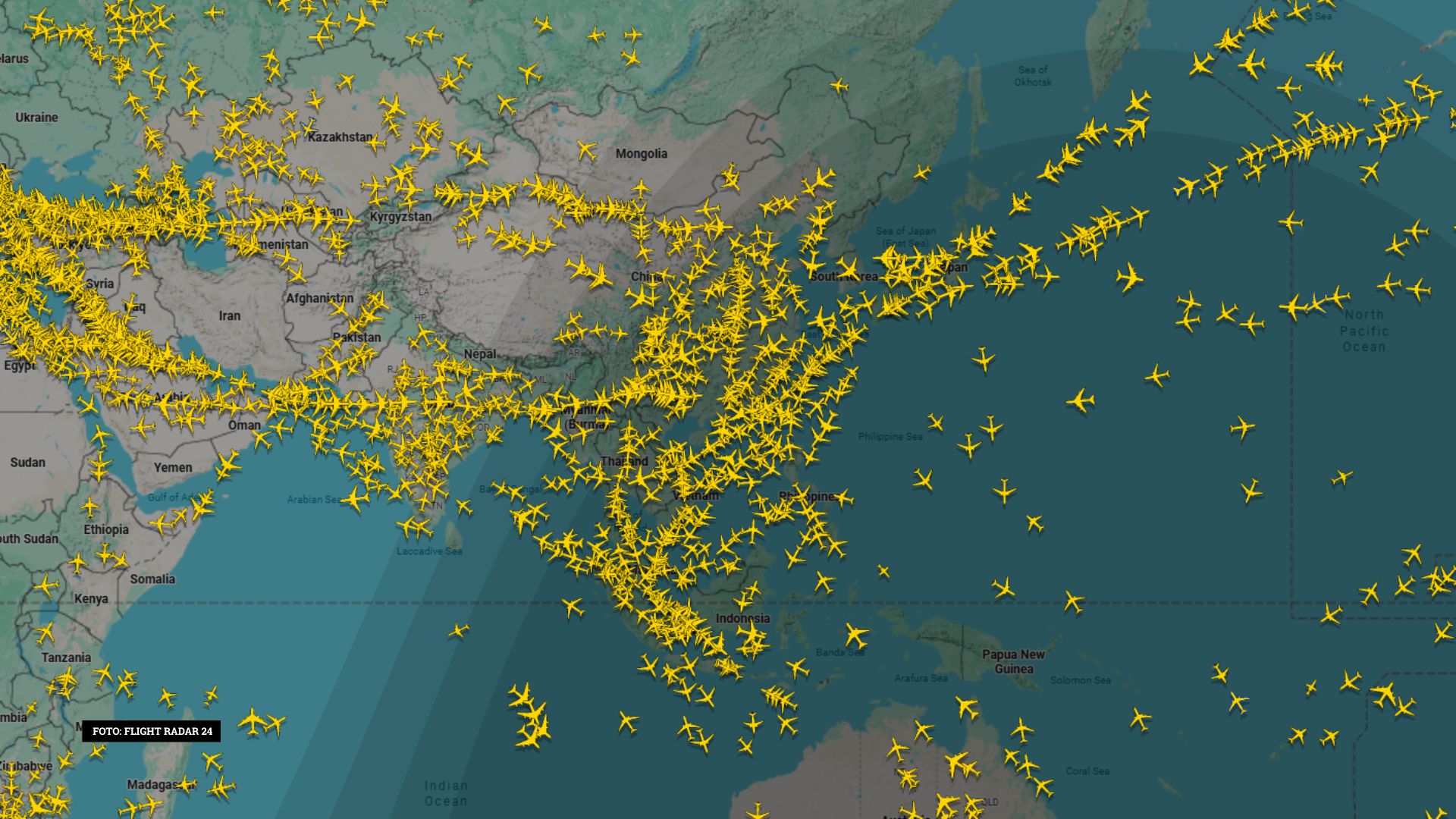 Congested airspace requires efficient, highly coordinated management. /Photo: FlightRadar24
Data only matters if decisions are shared
For Dammann, the answer does not sit in a single system. The decision chain has to connect the cockpit, air traffic control centres, landing sequence management and airport surface operations. He cited TopSky ATC, TopSky Sequencer and Green Flag Orchestrator as examples of tools that support earlier demand-capacity balancing and more accurate landing sequencing as traffic volumes rise.
In fragmented airspace, surveillance cannot rely only on ground radar. Space-based automatic dependent surveillance broadcast, or ADS-B, extends real-time aircraft surveillance into oceanic and remote airspace. When integrated with TopSky-Flow, that data allows air navigation service providers to coordinate flows before aircraft reach FIR boundaries.
“In fragmented airspace, the value lies not only in visibility, but in coordinated decision-making grounded in a common operational picture,” Dammann said.
Radar and data only matter if neighbouring control centres share the same traffic picture and are prepared to coordinate decisions before aircraft arrive at the next FIR boundary. Many parties can see traffic in their own airspace. The harder task is sharing the operational picture, setting priorities and acting before the load shifts from one FIR to another.
By the time passengers notice the problem, it has already moved through the operations chain. Delayed flights, missed connections, longer journeys and higher operating costs all begin with airspace that does not flow well.
Digital security has entered the airspace equation
Modern airspace is not only crowded. It is increasingly digital. Flight data, communications, navigation, air traffic flow management, cloud-based platforms and links between new systems and legacy systems now form one connected operational chain.
Dammann identified three pressures on operational stability: more frequent severe weather, rising Global Navigation Satellite System interference, and an expanding cyber threat surface across interconnected aviation systems. These factors affect safety margins and network reliability.
GNSS interference is no longer an isolated concern. In June 2025, EASA and IATA published a comprehensive plan to mitigate risks from GNSS interference, including jamming and spoofing, following growing concern over satellite navigation disruption in global aviation operations.
Cybersecurity can no longer be treated as back-office work. ICAO’s aviation cybersecurity strategy is built on seven pillars, including international cooperation, governance, legislation and regulation, cybersecurity policy, information sharing, incident management and capacity building.
For Asia-Pacific, the challenge is compounded by uneven digital maturity. States moving quickly into digitalisation still need to connect with others operating older systems. Those connections cannot be loose. A weak connection can become a risk to the wider network.
Dammann said the core functions of air traffic management must remain segregated from digital applications, while legacy systems should connect only through encrypted and monitored interfaces.
Without system separation and monitoring of legacy links, digital modernisation can open new risk pathways into the air traffic management network. Modernisation does not mean connecting everything without control. More connectivity creates more exposure unless security is built in from the beginning.
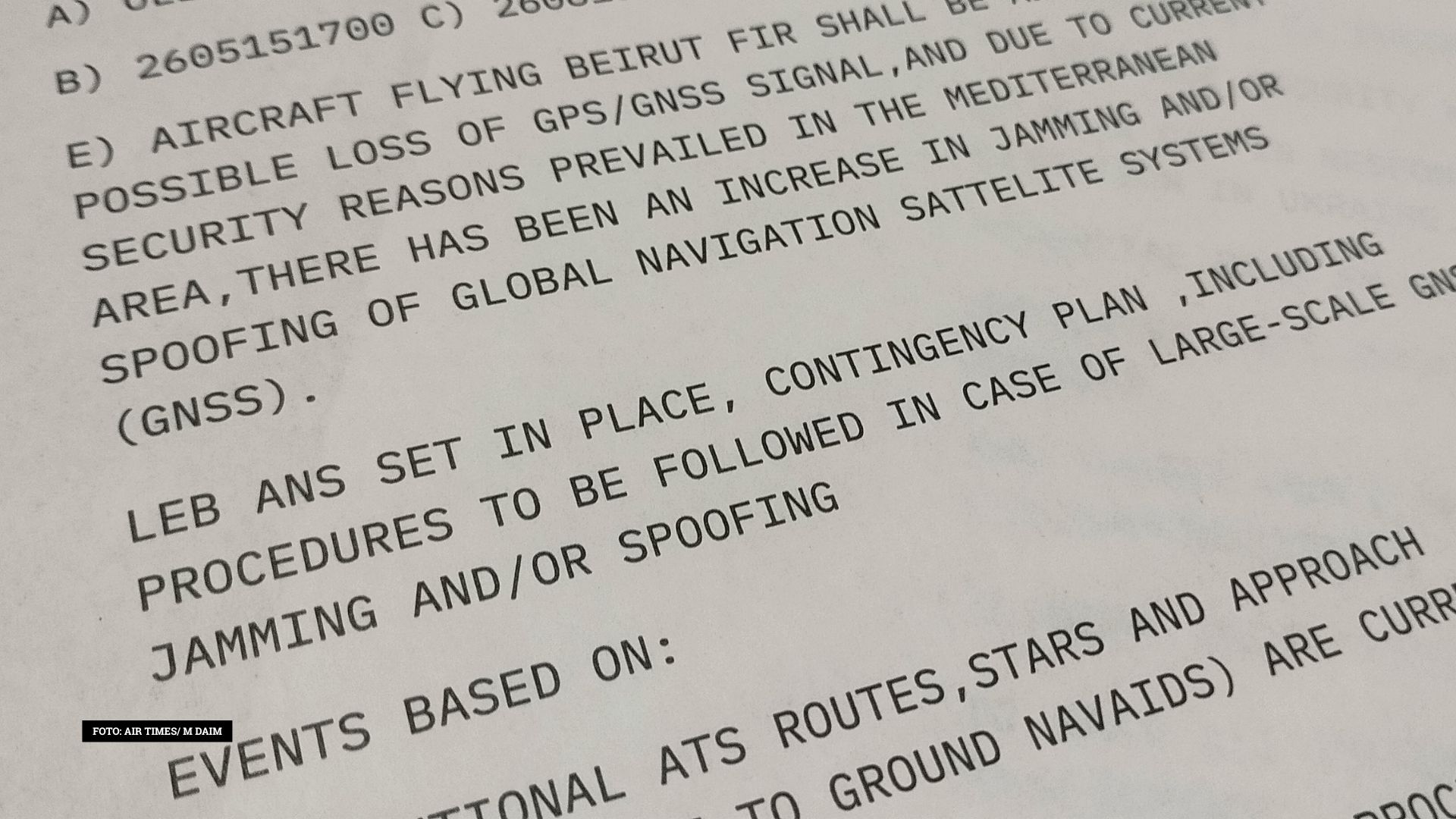
Airspace closures, navigational spoofing, and signal jamming have become increasingly common due to rising geopolitical tensions. /Photo: Air Times/M Daim
Conflict, GNSS disruption and the return of airspace risk
The Russia-Ukraine war, risks around Russian airspace, GNSS disruption and conflict-zone advisories show that global flight routes can change for reasons that have little to do with market demand and everything to do with security risk.
In January 2025, EASA updated its safety guidance for Russian airspace, advising operators against flying in affected Russian airspace west of longitude 60 degrees east at all flight levels.
For Asia-Pacific, disruption does not need to begin inside the region to have an impact. Route changes in Europe, the Middle East or other conflict-sensitive areas can push traffic into alternative corridors, alter connection schedules and put pressure on Asian hubs.
Better coordinated airspace gives air navigation service providers more time and more options when disruption occurs. Fragmented airspace is more likely to fall back on last-minute instructions, alternative routing and emergency decisions.
Asia-Pacific needs to move before airspace saturates
Asia-Pacific is adding traffic just as global aviation is being forced to plan around war risk, satellite-navigation interference and conflict-zone advisories. Demand is rising, airlines want to grow, and airports want to attract more flights. But that growth is not happening in a risk-free sky.
The region cannot wait for airspace to become saturated before coordination accelerates. Cross-border air traffic flow management, space-based surveillance, GNSS protection, cybersecurity and the integration of old and new systems must be treated as one network.
For passengers, the issue begins as a delay. For airlines, it becomes cost. For states, it touches airspace sovereignty, safety and economic resilience.
Asia-Pacific is not short of people who want to fly. The deciding factor is whether the region can manage airspace as an interconnected system, not as a series of airspaces that merely meet at FIR boundaries.
If coordination fails to move faster than growth, Asia-Pacific will have busier skies, but not necessarily safer, more efficient or more resilient ones. – airtimes.my